
What Is AI Marketing Automation and How Does It Work?
AI marketing automation is the use of intelligent software to manage, personalize, and improve marketing tasks that would otherwise require constant manual work. For growing businesses, that can include lead capture, email follow-up, segmentation, campaign reporting, and reminders for sales teams.
The goal is not to replace strategy or human relationships. The goal is to create a system that helps your team respond faster, communicate more consistently, and make better decisions from the data already inside your marketing and sales process.
What AI marketing automation actually means
Traditional automation usually follows fixed rules: if someone fills out a form, send an email; if they click a link, add a tag. AI-enhanced automation can go further by helping classify leads, recommend next steps, adjust messaging, and identify patterns across campaigns.
For example, a business may use automation to send a helpful email sequence after a lead downloads a guide. With AI support, the system can help tailor the follow-up based on the lead source, service interest, engagement level, or previous behavior.
- Lead capture and routing
- Email nurture sequences
- Lead scoring and segmentation
- Campaign reporting and optimization
- Follow-up reminders and sales handoff workflows
How the system works behind the scenes
A strong automation system starts with a clear customer journey. You define what happens when someone visits a key page, submits a form, books a call, replies to an email, or becomes inactive. Each behavior tells the system something about interest and intent.
The automation platform then uses those signals to trigger the right next step. That might be a helpful email, a sales notification, a CRM update, or a workflow that moves the lead into a more relevant sequence.
- Capture the lead with a form, booking page, or landing page
- Store the lead in a CRM or automation platform
- Segment the lead based on source, interest, and behavior
- Send timely follow-up messages
- Review performance and improve the system over time
Where AI creates the most value
AI is most useful when it improves decisions and removes bottlenecks. It can help summarize lead activity, identify which leads are more engaged, suggest content ideas, and support personalization at a level that is difficult to manage manually.
This is especially valuable for service businesses, agencies, consultants, local businesses, and B2B teams that rely on timely follow-up but do not have a large internal marketing department.
- Responding faster to new inquiries
- Keeping leads warm after the first contact
- Reducing manual follow-up work
- Improving visibility into what is converting
- Helping teams focus on the best opportunities
How DISI approaches AI marketing automation
We start with the business goal, not the tool. A good system should support lead generation, conversion, and customer engagement. That means your website, landing pages, CRM, email follow-up, and reporting need to work together.
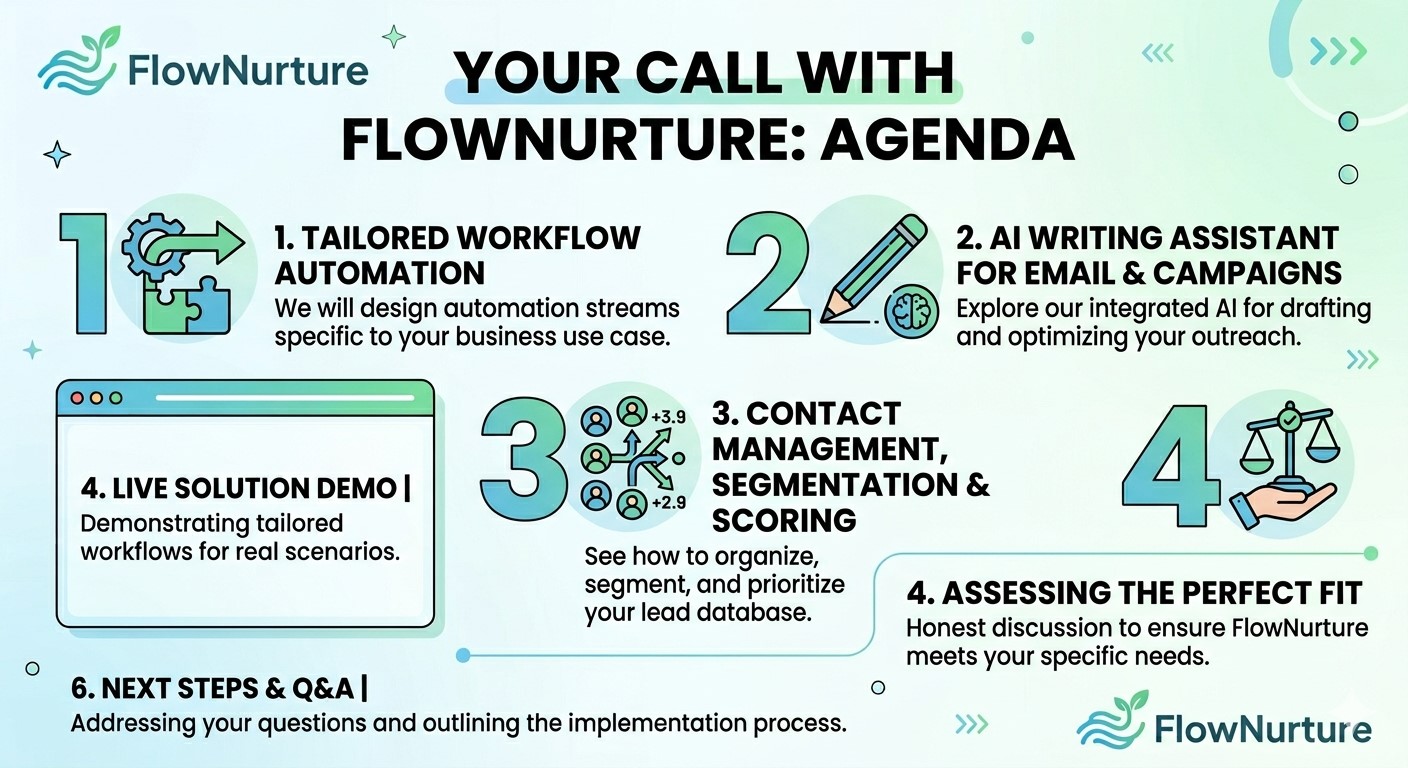
Our AI-Powered Marketing Automation service helps businesses design these systems from strategy through implementation. We also built FlowNurture to help businesses convert leads through intelligent follow-up.
How to decide whether this should be a priority
AI marketing automation should become a priority when it directly affects revenue, response speed, customer experience, or the team’s ability to follow through consistently. For owners and marketing leaders who want a clearer way to turn attention into pipeline, the goal is not to add another tool. The goal is to make the growth system easier to understand, easier to manage, and easier to improve.
The strongest automation programs begin with a mapped customer journey, not a list of software features. Before changing software or launching a new campaign, review the current path from first visit to inquiry, from inquiry to follow-up, and from follow-up to sales conversation. That path will usually reveal the gaps that matter most.
What to review before making changes
Start with the offer, the landing experience, and the follow-up process. Ask whether visitors can quickly understand who the service is for, what problem it solves, why the business is credible, and what action they should take next. Then review whether the team has a repeatable process after the lead is captured.
If the handoff between marketing and sales is unclear, even strong campaigns can underperform. A practical review should include website messaging, forms, lead sources, CRM stages, email follow-up, sales notes, and reporting. This is where connected services such as AI-Powered Marketing Automation can help turn separate tactics into a more reliable system.
How this connects to the wider growth system
No single page, campaign, or automation sequence should carry the entire growth strategy. Stronger results usually come from connecting multiple parts of the customer journey: attracting the right audience, presenting a clear offer, capturing the lead, responding quickly, nurturing the relationship, and measuring what happens after the first conversion.
That is why this topic often overlaps with lead generation systems. When these pieces work together, the business gains a clearer view of what is generating interest, what is creating friction, and which improvements are most likely to support qualified growth.
Common mistakes to avoid
A common mistake is automating a weak process. If the offer is unclear, the landing page is hard to use, or the follow-up message is generic, automation simply repeats those problems faster. Another mistake is making decisions from surface-level activity. More clicks, more emails, or more traffic are not always signs of progress. The better question is whether those activities are creating qualified conversations and moving the right prospects closer to a decision.
A good improvement plan stays focused. Choose one or two bottlenecks, document the current baseline, make a controlled change, and review what happened. That approach is more useful than making several changes at once and being unable to tell which one mattered.
What to measure
Track form submissions, booked calls, qualified conversations, follow-up completion, reply quality, and the time between lead capture and first meaningful response. The exact numbers will vary by business model, but the principle is the same: measure the steps that show whether prospects are moving forward. Avoid relying only on vanity metrics that look good but do not explain pipeline quality.
For teams that need more structured follow-up, FlowNurture can support a more consistent nurturing process. The important point is to combine automation with clear strategy, relevant messaging, and practical reporting.
When to get support
It may be time to get help when the team is doing the same manual work repeatedly, leads are not being followed up consistently, campaigns are difficult to measure, or the website is not producing enough qualified inquiries. Support is also useful when the business has several disconnected tools but no clear growth system tying them together.
A focused audit can identify the highest-impact fixes before a larger investment is made. That keeps the work grounded in business outcomes rather than assumptions, and it gives the team a clearer roadmap for what to improve first.
Next step
If your business is capturing leads but follow-up is inconsistent, automation may be one of the highest-impact improvements you can make.
Book a Free Growth Audit and we will help identify where your marketing, follow-up, and conversion systems can perform better.